
English| EUR
Suggested for you
More currencies
Choose a language
The Ngātoro-i-rangi carving sits 14 metres above the waterline on a sheer cliff face accessible only by boat or kayak. This guide covers the kayaking routes to Mine Bay, typical paddle times, lake conditions and what you'll see when you arrive.
Quick answer
Mine Bay is open 24 hours daily and free to visit, but accessible only by watercraft. Most paddlers launch from Acacia Bay or Kinloch, with distances ranging from 4 to 12 kilometres one-way depending on your starting point. Morning departures between 08:30 and 10:30 offer the calmest water and the best natural light on the cliff face.
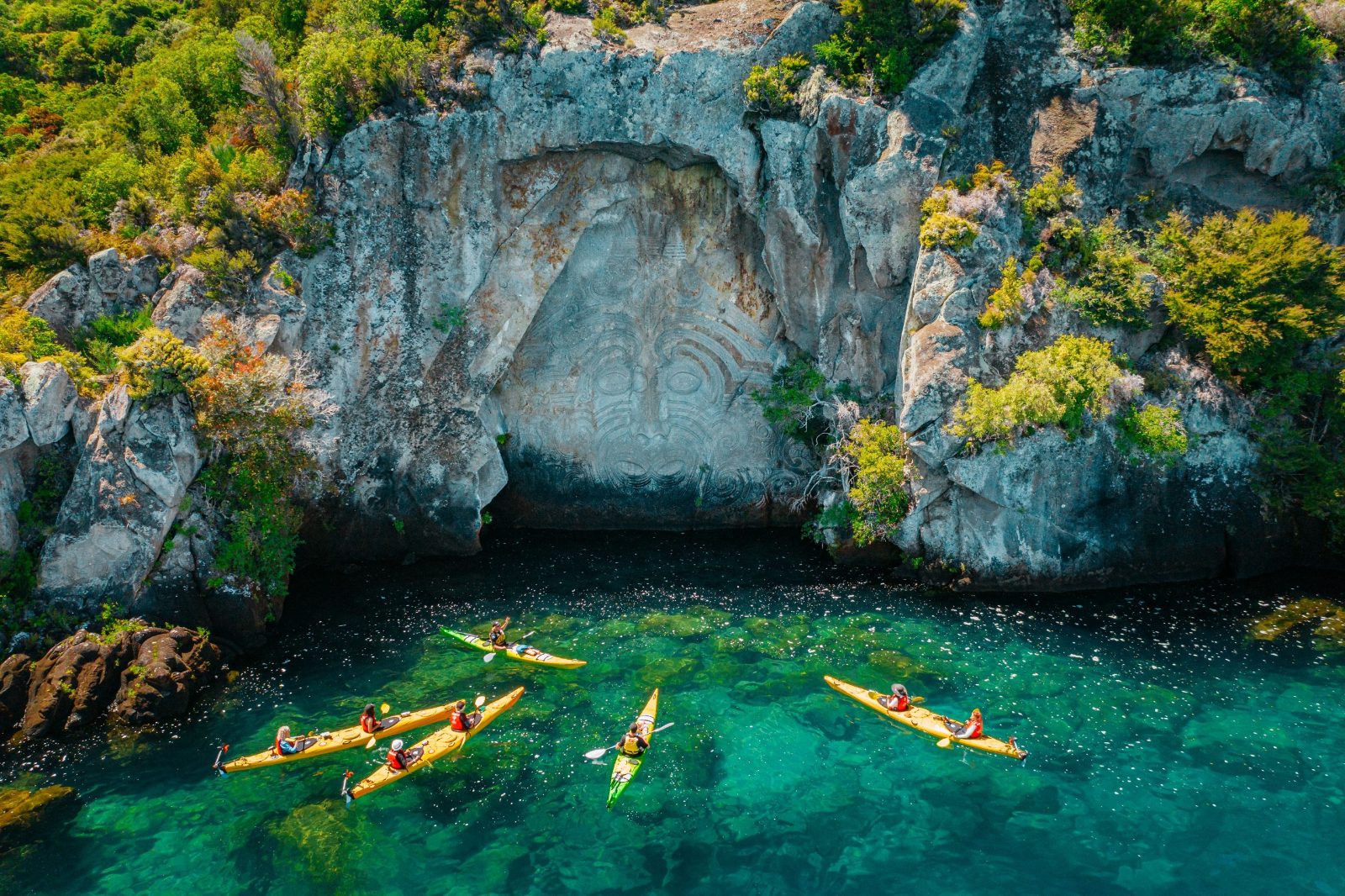
The carving you paddle toward covers 14 metres of vertical rock and weighs over five tonnes. It was completed in the late 1970s by master carver Matahi Whakataka-Brightwell and a four-person team working from scaffolding anchored to the cliff. The figure depicts Ngātoro-i-rangi, the navigator who guided the Te Arawa waka to New Zealand and is credited with calling volcanic fire from the earth to warm his people. Kayaking to the Maori rock carvings gives you control over your arrival time and viewing angle. Commercial cruise boats stop for 10 to 15 minutes; paddlers can drift close to the base, study the traditional motifs carved into the torso and limbs, and return when the light shifts. The cliff face changes colour through the day as the sun moves across Lake Taupō, and you'll often have the bay to yourself outside cruise schedules. Lake Taupō is New Zealand's largest lake, formed by a volcanic eruption in 232 CE that ejected 120 cubic kilometres of material and left a caldera 616 square kilometres in surface area. The water is cold year-round, typically between 10 and 17 degrees Celsius, and weather can turn quickly. Wind funnels through the surrounding ranges and generates whitecaps within an hour, so most experienced paddlers launch early and monitor the forecast closely. The paddling experience itself divides into open-water crossings and sheltered bays. Acacia Bay offers the shortest route but crosses exposed water. Kinloch hugs the western shoreline and adds distance but provides more shelter. Both require intermediate kayaking fitness and the ability to self-rescue in cold water. Guided tours provide safety briefing, navigation support and cultural context from local operators who hold relationships with the iwi who commissioned the carving.
“The cliff face changes colour through the day as the sun moves across Lake Taupō, and you'll often have the bay to yourself outside cruise schedules.”
The Ngātoroirangi Mine Bay Māori Rock Carvings are located at Mine Bay, Lake Taupō, and are accessible exclusively via watercraft. There is no road access to the carvings themselves.
Drive to Acacia Bay or Taupō Boat Harbour
Private kayak or commercial tour from Taupō
The best arrival window is 08:30–10:30, as morning hours offer the calmest lake conditions and best lighting for viewing.
This plan suits first-time paddlers joining a guided tour from Acacia Bay or similar launch points. Expect three to four hours on the water, with time for photographs and brief stops at cultural sites.
Your guide reviews paddle technique, lake conditions, and cultural protocols before you launch. Most operators provide spray skirts and dry bags for gear.
The route follows the western shore, passing eroded pumice formations and submerged rock shelves. Keep a steady pace; the bay lies roughly 5 kilometres from most launch points.
The 10-metre Ngātoro-i-rangi carving comes into view as you round the headland. Guides explain the 1970s creation and the navigator's role in Māori migration traditions.
Pull onto the rocky beach for a short break and snack. The return paddle retraces your route, with wind assistance if conditions favour an afternoon breeze.
Final stretch back to shore, where you'll rinse gear and load kayaks. Total paddling distance sits near 10 kilometres round-trip.
The fourteen-metre-high Mine Bay carvings were created in 1976 and completed in 1980 by master carver Matahi Brightwell, working alongside a team of artists from Ngāti Tūwharetoa. Commissioned to honour ancestral navigator Ngatoroirangi, the carvings depict the tohunga who guided the Te Arawa waka from Hawaiki to Aotearoa over six centuries ago. Brightwell worked from scaffolding suspended against the cliff face, chiselling the rhyolite rock with hand tools. The monumental scale required four seasons of intermittent work, with the team returning each summer when lake conditions permitted safe access. The central figure, shown in profile with arms outstretched, measures over ten metres from head to base. Ngatoroirangi's features are rendered in the angular, deeply carved style of traditional Māori whakairo, with spirals and ridges that catch shifting light across the water. Smaller carvings flank the main figure, representing the mythic companions who sustained Ngatoroirangi during his ascent of Mount Tongariro. The site was chosen for its spiritual significance within Tūwharetoa tradition and its visibility from the lake. Unlike wood carvings that weather and require renewal, the rhyolite ensures permanence. The maori rock carvings kayak route has become the primary means of viewing the work, preserving the intention that visitors approach by water rather than overland. Today the carved cliff face remains unaltered since 1980, maintained through restricted access and Tūwharetoa guardianship. The mineral streaks and lichen patterns that have formed along the carving margins integrate the artwork further into the natural rock, while the incised lines retain their original depth and clarity.
Ngatoroirangi navigates Te Arawa waka to Aotearoa, later becomes ancestor revered by Ngāti Tūwharetoa.
European surveyors chart Lake Taupō, noting Mine Bay's steep rhyolite cliffs.
Master carver Matahi Brightwell begins carving the Ngatoroirangi figure at Mine Bay, working from suspended scaffolding.
Carving completed after four seasons of work; the fourteen-metre depiction becomes the largest contemporary Māori rock art in New Zealand.
Guided boat and kayak operators begin offering access to the carvings, establishing water-based viewing protocols.
The site gains international recognition; Tūwharetoa and Department of Conservation collaborate on visitor management guidelines.
Lake Taupō's conditions change quickly, and the 10 km round trip demands more stamina than many visitors expect. These preventable errors turn a manageable paddle into a risky outing.
Ignoring wind forecasts and launching in afternoon gusts
Check MetService wind predictions for Lake Taupō before departure. Morning hours (08:30–10:30) offer the calmest conditions; postpone if sustained winds exceed 15 knots.
Wearing cotton clothing that holds water and chills you
Choose synthetic or merino layers that wick moisture and insulate when wet. Pack a waterproof shell even on clear days.
Underestimating the physical toll of the 5 km return journey
Reserve energy for the paddle back—fatigue peaks on the return leg. If you struggle against wind or chop, hug the shoreline and rest before continuing.
Failing to secure a waterproof case for phone and essentials
Lake spray and capsize risk are real. Use a sealed dry bag or waterproof pouch; a wet phone leaves you without navigation or emergency contact.
Paddling alone without notifying someone of your route and return time
Always inform a contact of your launch point, destination, and expected return. Solo paddlers face compounded risk if conditions deteriorate or injury occurs.
Pack smart for a half-day paddle on open water—lake conditions change quickly and mobile signal is limited once you launch.
Everything you need to know about maori rock carvings kayak
Booking a maori rock carvings kayak tour allows you to get right up to the rock face. Paddlers can nose their kayaks into the narrow alcoves to inspect the details of the artwork. This provides an intimate perspective that larger tour boats cannot replicate.
No prior paddling experience is required for most guided excursions to the alcove. Instructors provide safety briefings and basic paddling techniques before launching onto the water. Most tour operators use stable double kayaks suitable for beginners and families.
There is a 0 NZD entrance fee to visit the area, as the bay itself is free to access. However, because no roads lead to this location, visitors must use a watercraft or book a guided maori rock carvings kayak experience. Renting equipment or hiring a local guide will incur standard operator fees.
The best arrival window is 08:30–10:30 when Lake Taupō is typically at its calmest. Early morning light illuminates the stone face beautifully, making it easier to appreciate the craftsmanship. Wind speeds often pick up in the afternoon, making the return journey more challenging.
There is no land access or walking track to this secluded bay. You must arrive by water, which makes a maori rock carvings kayak excursion one of the most popular active options. Alternative transport includes sailing boats or motorized cruises departing from Taupō.
A standard guided trip generally takes about three to four hours in total. This includes the paddle out from the launch point, time spent viewing the towering artwork, and the return journey. Most itineraries allow for short rest breaks and photo opportunities along the volcanic cliffs.
Most commercial guides welcome children when they are accompanied by an adult. You can book a family-friendly maori rock carvings kayak outing where younger participants ride in the front of a double kayak. Always verify age minimums with your operator before completing your booking.
The contemporary artwork was carved in the late 1970s by master carver Matahi Whakataka-Brightwell. He created the main likeness of Ngātoroirangi to protect the lake and commemorate his ancestors. The work was sculpted directly into the rock face using traditional and modern tools over four summers.