
English| EUR
Suggested for you
More currencies
Choose a language
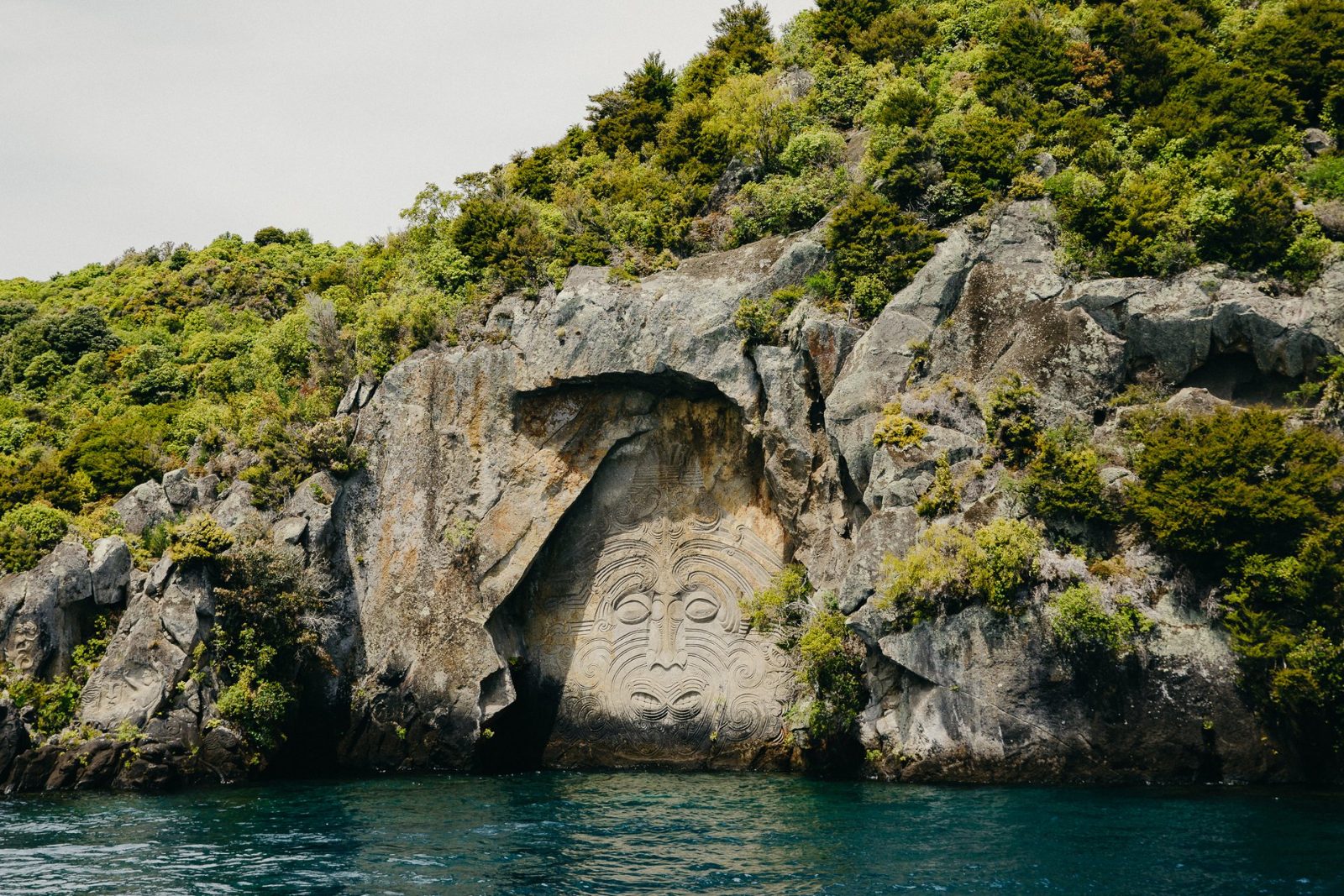
The ten-metre carved figure of Ngātoroirangi stands above the waterline at Mine Bay, accessible only by water. This guide covers the access hours, paddling conditions, and practical logistics for reaching the carvings by kayak or chartered vessel.
Quick answer
The ngātoroirangi mine bay māori rock carvings kayak access is available daily from 00:00 to 23:59, with free entry to the site. The carvings are located on a cliff face accessible only by water—via private kayak, rented watercraft, or guided tour. The optimal arrival window is 08:30 to 16:00, when lake conditions are calmest and visibility is best for viewing the cliff art.
The carving site at Mine Bay has no shoreline path, no dock, and no land-based viewing platform. Visitors arrive by water or they do not arrive at all. That single constraint shapes every logistical decision—timing, weather monitoring, and the choice between self-guided paddling and operator-led tours. The cliff face rises directly from Lake Taupō's western shore, fifteen kilometres south of the town centre. Matahi Whakataka-Brightwell and a team of carvers completed the work in the late 1970s, chiseling the figure of the navigator Ngātoroirangi and two smaller designs into volcanic rock. The scale becomes apparent only from the water: the central figure spans ten metres, its contours visible from several hundred metres offshore. Morning light strikes the wall obliquely, sharpening the relief; afternoon sun flattens it. Wind picks up after midday during most months, turning glassy water into chop that complicates both paddling and photography. The ngātoroirangi mine bay māori rock carvings kayak route from Acacia Bay or Kinloch measures between eight and twelve kilometres depending on launch point, with paddlers typically allowing two to three hours for the round trip plus viewing time. Rental operators issue single and tandem kayaks; most also offer sit-on-top models suited to beginners. Guided tours bundle instruction, safety equipment, and historical context, departing twice daily during peak season. Self-guided paddlers must monitor the regional wind forecast—northwesterlies above fifteen knots make the return leg difficult for intermediate paddlers. The site remains open around the clock, but practical access depends on daylight and fetch. Launching before dawn or after dusk eliminates visibility; launching during storm warnings eliminates safety margins. The 08:30 to 16:00 window captures both calm water and sufficient light for viewing the details carved into the porous stone. No mooring exists at the base of the cliff, so watercraft drift while occupants look upward, cameras raised. The experience lasts as long as conditions and stamina allow, then the paddle back begins.
“The carving site at Mine Bay has no shoreline path, no dock, and no land-based viewing platform.”
The Ngātoroirangi Mine Bay Māori Rock Carvings are located at Mine Bay, Lake Taupō, and have no land access. Visitors must reach the carvings by water via private boat or paid kayak tour.
Drive to Acacia Bay North boat ramp (nearest launch point)
Paddle from Acacia Bay to Mine Bay
Depart from Taupō Boat Harbour (Marina)
Acacia Bay provides the closest launch point for kayakers. Plan your arrival for the best arrival window of 08:30–16:00 to ensure the calmest lake conditions for your paddle.
Access to the Ngātoroirangi Mine Bay Māori Rock Carvings is free of charge. Costs for visitors typically involve hiring equipment or booking a guided kayak tour from local providers.
Verdict: While the carvings are free to view, most visitors pay between 60 NZD and 180 NZD depending on whether they choose independent equipment rental or a guided tour.
The optimal time to kayak to the Ngātoroirangi Mine Bay Māori Rock Carvings is between 08:30 and 16:00, when morning and early afternoon bring the calmest lake conditions and best visibility.
Warm days averaging 10°C to 22°C
Summer provides the warmest water and most stable weather. Early morning departures help you avoid the afternoon lake breezes.
Cooler days averaging 8°C to 17°C
March and April offer clear, calm water before winter storms begin. Lake temperatures drop, so thermal layers are recommended.
Variable days averaging 6°C to 18°C
Spring brings fresh air, but October is often the windiest month. Kayakers must monitor forecasts as conditions change rapidly.
—
Paddling early ensures calm waters on Lake Taupō. The morning sun illuminates the carvings directly, improving visibility for photos.
Verdict: The best time for this kayak trip is Tuesday to Thursday at 08:30 in February, which avoids weekend crowds and offers the calmest waters.
The ngātoroirangi mine bay māori rock carvings kayak destination owes its existence to master carver Matahi Whakataka-Brightwell, who approached the Ngāti Tūwharetoa Trust Board in 1976 with a vision to carve the ancestral navigator directly into the cliffs of Mine Bay. Ngātoroirangi, the Māori priest and navigator who guided the Te Arawa waka to Aotearoa over six centuries ago, was said to have claimed the Taupō region for his people after summoning fire from the underworld to save himself from freezing atop Mount Tongariro. Whakataka-Brightwell's proposal honored this founding ancestor with a monumental cliff sculpture visible only from the water, echoing the arrival journey itself. Between 1978 and 1980, Whakataka-Brightwell and his team worked from scaffolding anchored to the sheer rock face, carving the fourteen-meter likeness of Ngātoroirangi into the pumice stone above the waterline. The main figure depicts the ancestor in a posture of spiritual authority, with traditional moko patterns across the face and body. Flanking the central carving are two smaller figures representing Ngātoroirangi's daughters and a Celtic-inspired guardian motif, added to acknowledge Whakataka-Brightwell's own mixed heritage. The artist used chisels and angle grinders to cut through the volcanic substrate, a material soft enough to shape but vulnerable to erosion over time. The carvings were unveiled in 1980 and quickly became a pilgrimage site for paddlers and a focal point of cultural tourism on Lake Taupō. Ngāti Tūwharetoa elders blessed the work, and it remains under the guardianship of the iwi. Periodic maintenance addresses weathering of the pumice surface, though the original lines and moko details remain legible. Visitors arriving by kayak or boat today see the same towering profile that emerged from the cliff face decades ago, a monument to ancestral navigation and the endurance of Māori rock carving tradition in a landscape shaped by fire and water.
Ngātoroirangi, navigator of the Te Arawa waka, claims the Taupō region and summons volcanic fire to survive on Tongariro.
Master carver Matahi Whakataka-Brightwell presents his proposal to carve Ngātoroirangi into the Mine Bay cliffs to the Ngāti Tūwharetoa Trust Board.
Carving work begins on the fourteen-meter rock sculpture, with the team working from scaffolding anchored to the pumice cliff face.
The Mine Bay carvings are completed and unveiled, depicting Ngātoroirangi flanked by guardian and ancestral figures.
The carvings become a cultural landmark accessible only by water, with ongoing maintenance by Ngāti Tūwharetoa to preserve the moko and sculptural detail.
Pack essentials for open-water paddling and protection of electronics in lake spray conditions.
Most paddling problems at Mine Bay stem from route planning and weather judgment rather than technique. Avoiding these errors keeps the trip safe and the carvings visible.
Assuming you can walk or drive to the carvings
Mine Bay is accessible only by water. Launch from Acacia Bay or book a guided kayak tour that includes transport and equipment.
Paddling during strong southerly winds
Southerly winds create dangerous whitecaps on Lake Taupō. Check the forecast and paddle only in calm conditions, ideally before midday.
Bringing unsecured electronics without waterproof protection
Capsizes and splashes are common for novice paddlers. Store phones and cameras in a sealed dry bag clipped inside the kayak.
Departing too late in the afternoon
Late starts mean paddling back against afternoon winds and fading light. Launch by 09:00 to allow three hours on the water with margin.
Underestimating the 5km return paddle distance
The round trip from Acacia Bay takes 2-3 hours depending on fitness and conditions. Build in rest time at the carvings and allow for slower progress on the return leg.
Everything you need to know about ngātoroirangi mine bay māori rock carvings kayak
No land access exists for the giant artwork because it is set directly into the sheer cliffs of the lake. To view them, you must travel by water, with many visitors opting for a guided Lake Taupō cultural landmarks tour.
A guided ngātoroirangi mine bay māori rock carvings kayak trip is widely considered the best option to get right up to the cliff face. Paddling allows you to navigate into the shallow alcoves where larger vessels cannot safely steer. This offers an intimate view of the 14-meter-tall masterwork created by Matahi Whakataka-Brightwell.
The entrance fee is 0 NZD, making it completely free to view the sculptures. However, to get close to the cliff face, most visitors choose a paid ngātoroirangi mine bay māori rock carvings kayak experience. This allows you to explore the alcoves without needing to own a private boat.
Master carver Matahi Whakataka-Brightwell led a team of artists to create the main likeness in the late 1970s. The central figure represents Ngātoroirangi, a legendary Māori navigator who guided local tribes to the region, making this a highlight of any Taupō Māori rock carvings tour.
The Ngātoroirangi Rock Carvings are technically open 24 hours a day, seven days a week, with opening hours of 00:00–23:59 from Monday to Sunday. However, paddling in the dark is not recommended for safety reasons.
Most operators running a ngātoroirangi mine bay māori rock carvings kayak tour schedule about 4 hours of total time. This duration includes safety briefings, paddling to the bay, exploring the volcanic rock alcoves, and returning.
The best arrival window is 08:30–16:00, when morning and early afternoon conditions present the calmest lake waters. Early departures also offer optimal visibility for admiring the intricate detailing on the rock face.
No previous experience is required as long as you join an organized excursion. Experienced guides will teach you how to handle the double kayaks before you launch onto the lake.